North Sea Facts

All you need to know about UK oil and gas

The North Sea has been the cornerstone of UK energy security and economic prosperity for more than half a century - and it will be for decades to come.

Today, the UK Continental Shelf continues to play a vital role in that system: helping meet UK gas demand, supporting thousands of skilled jobs and contributing billions of pounds to the UK Treasury. 

Official figures show that UK production has supplied around half of the country's gas needs for more than a decade, and in 2024-25 alone it generated £4.5 billion in tax revenue.

Crucially, while demand remains, domestic production can also reduce the need for higher-carbon imports, particularly LNG, while retaining more jobs, investment and supply chain activity in the UK.

But public debate about the North Sea often misses that wider context.

North Sea Facts exists to provide it.

Our aim is simple: to present the facts, explain the data and help inform a more balanced conversation about the role of the North Sea in our economy, in our energy system and in communities up and down the UK.


The Facts

Too often, debate about oil and gas is reduced to simple slogans and short soundbites that fail to capture a more complex reality.

Below, we examine some of the most common claims about the UK North Sea and compare them with the available evidence.

Each response draws on publicly available data and analysis from government, independent bodies and recognised research organisations, providing the context behind the headlines.

Browse by topic or explore each question individually.


Investment & Jobs

The energy transition will reshape Britain's offshore workforce over the coming decades.

Oil and gas workers possess many of the skills needed in emerging industries such as offshore wind, hydrogen and carbon capture, but the pace of new investment and job creation will determine how successfully that transition takes place. 

This section examines the evidence on employment, skills and the future of the UK's offshore energy workforce.

How many jobs does the oil and gas industry support in the UK?

The oil and gas industry provides well-paid employment for tens of thousands of people up and down the UK, spanning everything from drilling to catering. 

READ MORE →

Do new licences protect jobs?

Ending new licensing does not just affect future discoveries - it sends a clear signal about future North Sea investment.

READ MORE →

Can oil and gas workers move into renewables easily?

There is high skills transferability, but the renewable jobs, projects and investment are not yet available at scale.

READ MORE →

Back to top


Energy security

Since Russia’s invasion of Ukraine in 2022, energy security has been front and centre of government agendas across Europe.

As domestic production declines and geopolitical tensions disrupt traditional trading routes, decisions about imports, infrastructure and investment become increasingly important. 

This section explores what energy security means in practice, and how domestic production fits alongside renewables, electricity and international trade.

Can Britain simply import the energy it needs?

Britain can import energy, but greater reliance on overseas supplies comes with economic, environmental and security costs.

READ MORE →

Is the North Sea is running out anyway?

Official figures show there is still material oil and gas potential to develop in the North Sea.

READ MORE →

Can renewables replace oil and gas in the near term?

Britain needs to grow renewables faster to cut emissions, but it still relies heavily on oil and gas today. The transition requires both: rapid clean-energy build-out and a managed reduction in fossil fuel demand.

READ MORE →

Can wind and solar provide all the energy Britain needs?

Wind and solar are essential to cutting emissions, but they cannot provide all the reliability Britain needs on their own.

READ MORE →

What impact does ending new licences have on UK production?

Ending new licences will have more than a marginal impact on UK production, because it shapes the investment conditions that determine whether remaining resources are actually developed.

READ MORE →

Does the ownership of North Sea fields mean production won’t benefit the UK?

Oil and gas produced from the North Sea is developed under UK licences, regulated by the UK, taxed by the UK, and supported by UK workers, ports, engineering companies and supply chains, regardless of the operator.

READ MORE →

Will production from Rosebank benefit the UK?

Rosebank brings gas directly into the UK, adds oil to the wider European energy system Britain relies on, and supports billions of pounds of investment and hundreds of long-term jobs in the UK.

READ MORE →

Will new North Sea oil and gas improve energy security?

Domestic oil and gas makes us more independent - supporting energy security while demand remains high.

READ MORE →

Back to top


Emissions

The UK has committed to reaching net zero emissions by 2050. The evidence shows that achieving this depends on reducing demand for fossil fuels over time. 

It also raises important questions about where the oil and gas Britain still needs is produced and the emissions associated with different sources of supply, as this section explains.

Are new North Sea projects compatible with net zero?

Under the Government’s own forecasts, the UK will still need oil and gas at net zero. It is only sensible this is met wherever possible by North Sea production.

READ MORE →

Will stopping UK production reduce global emissions?

Emissions fall when demand falls. Cutting UK supply alone risks shifting production overseas instead.

READ MORE →

Is UK oil and gas cleaner than imports?

Some imports are cleaner than UK production, but others have a substantially higher carbon footprint.

READ MORE →

Back to top


Cost of Living

Much of the debate about oil and gas focuses on whether increasing North Sea supply would reduce household energy bills and ease the UK’s cost-of-living crisis.

The North Sea has returned more the £400billion in tax revenues to Westminster since production started in the 1970s - money which has underpinned UK public services for five decades. 

Will new drilling lower bills?

Bills are shaped by wholesale markets, but domestic production keeps more jobs, investment and tax revenue in Britain while demand remains.

READ MORE →

Is the industry asking for tax breaks?

The industry is asking for a stable, investable tax regime - not low taxation.

READ MORE →

Are UK oil companies making huge profits?

Global profits are not the same as UK North Sea profits.

READ MORE →

Does exported North Sea oil benefit the UK?

North Sea oil is part of a wider European refining and oil products system Britain relies on, while domestic production supports UK jobs, investment, tax revenues and supply-chain capability.

READ MORE →

Back to top

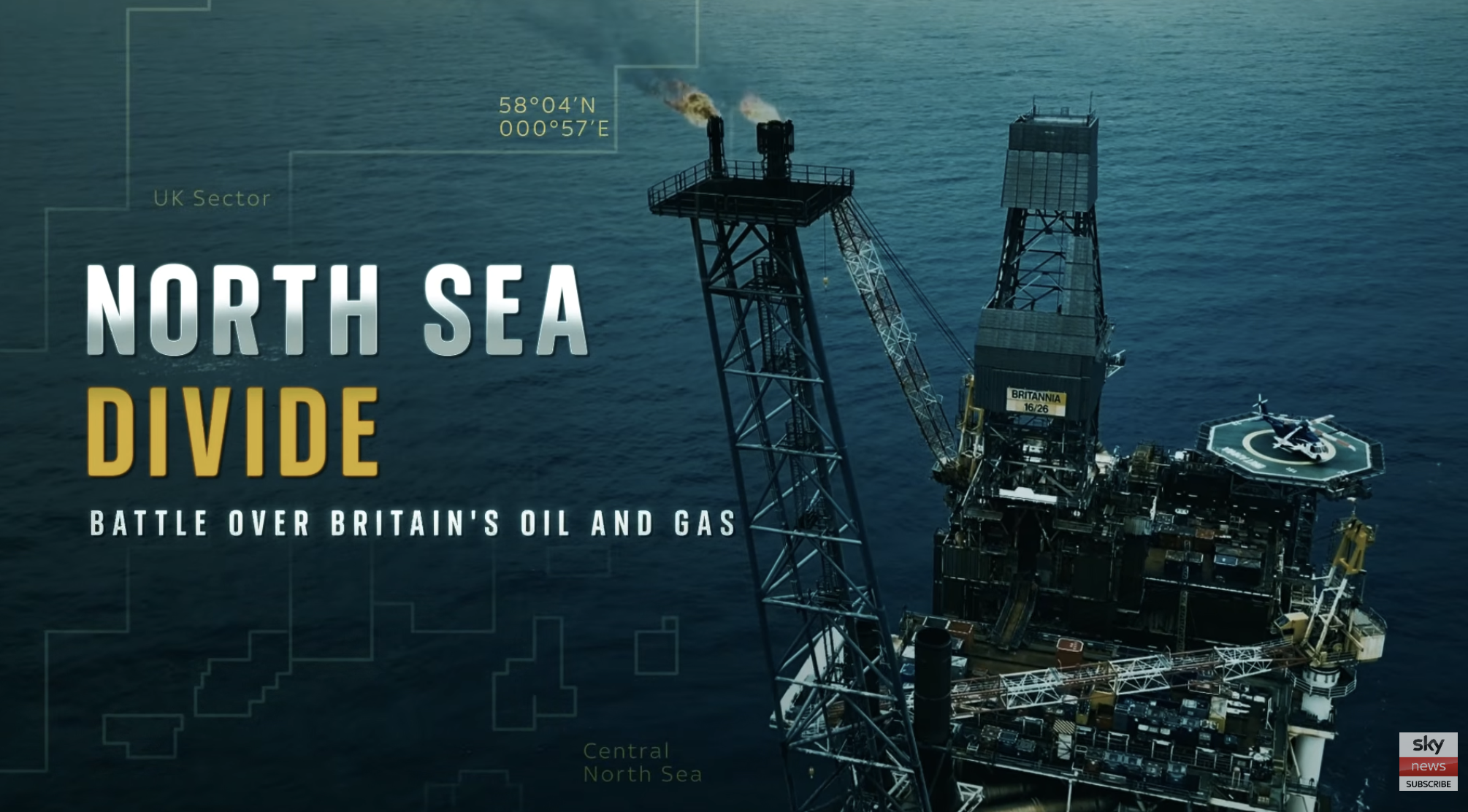
Sky News documentary puts North Sea future under spotlight

The future of the North Sea is the focus of a new Sky News documentary as the debate over further oil and gas development moves back to the centre of British politics.

Sky’s economics and data editor Ed Conway travels offshore and visits key parts of the UK’s energy infrastructure to examine how much oil and gas remains in the basin – and what role it could play in Britain’s energy security.

Screenshot 2026-08-14 at 09.35.42

Watch the recent documentary exploring the future of the North Sea

Click here →

"In this time of great global uncertainty, we should be using our own resources."

Jack Middleton SNP

Jack Middleton

MSP for Aberdeen Central

“I would have preferred that Europe could make do with green energy. But the reality is different.”

Lars Aagaard

Lars Aagaard

Danish Energy Minister

“The oil and gas industry is crucially important… and should be developed, not phased out.”

Jonas Gahr Støre

Jonas Gahr Støre

Norwegian Labour Prime Minister

Britain should produce more energy “of every kind.”

Tara Singh

Tara Singh

RenewableUK

“There’s no point shipping gas from the other side of the world when we have it here.”

Greg_Jackson_Bloomberg_2

Greg Jackson

Octopus Energy

“A careful overlap across all operations in the North Sea is essential.”

Claire Mack Scottish Renewables

Claire Mack

Scottish Renewables

“Domestic gas from Jackdaw and oil from Rosebank are essential.”

Unites_Sharon_Graham_in_2024

Sharon Graham

Unite

“The policy in the North Sea and the approach has just been utter madness.”

Gary Smith

GMB

“We believe we should use our own assets.”

Shevaun-Haviland-bcc

Shevaun Haviland

British Chambers of Commerce

“Oil and gas will be an important part of our energy mix for years to come.”

Rachel Reeves

Rachel Reeves

Former Chancellor

Rosebank and Jackdaw mean “security, jobs and tax revenue.”

Official_portrait_of_Josh_Simons_MP_crop_2

Josh Simons

Labour MP

“Backing Rosebank and Jackdaw [means] supporting jobs and growth plus tax revenue.”

Callum Anderson MP Labour-1

Callum Anderson

Labour MP

“Energy security is national security.”

Labour Anas Sarwar

Anas Sarwar

Scottish Labour

“The North Sea remains the UK’s cleanest and most secure source of oil and gas.”

Russell-Borthwick-QES-1

Russell Borthwick

Aberdeen & Grampian Chamber of Commerce

"If we don't take gas from the North Sea, we have to take LNG imports from the Middle East or shale gas imports from the US and the carbon footprint of these are even bigger than the domestic supply."

Torcuil Crichton MP

Torcuil Crichton

MP for Na h-Eileanan an lar

"Without a change in the way the Government talks about the North Sea, the energy transition could take longer, and cost more."

Bill Esterton

Bill Esterton

Energy Security and Net Zero Committee Chair

"For a low carbon future, we must support current jobs and skills in engineering and other areas, focusing on people. We should start with Jackdaw and Rosebank."

Graeme Downie

Graeme Downie

MP for Dunfermline and Dollar
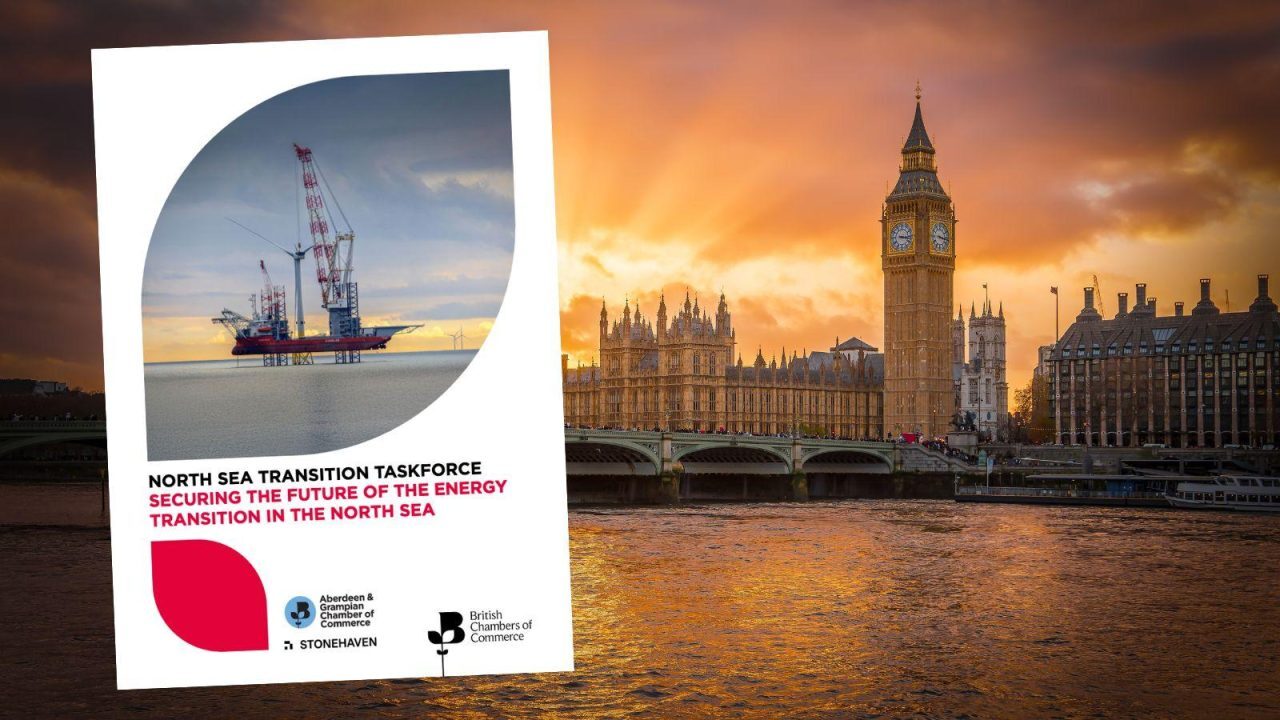
North Sea Transition Taskforce

The North Sea Transition Taskforce has called on the UK Government to rapidly establish a long-term, integrated plan to deliver a just energy transition in the North Sea.

The Taskforce is an independent body, supported by the British Chambers of Commerce, which has brought together representatives from supply chain business, academia, environmental groups, and trade unions.

Untitled-design-11_2025-03-30-225941_buie

Securing the future of the energy transition in the North Sea

Read the full report here →

Energy Transition Survey

The energy transition survey is a comprehensive report on confidence, investment and transition in the energy sector delivered by Aberdeen & Grampian Chamber of Commerce in partnership with D2Zero and Johnston Carmichael.

In the latest report - The 43rd Energy Transition Report - it shows overwhelming industry belief that the basin still has a long-term future under the right conditions.